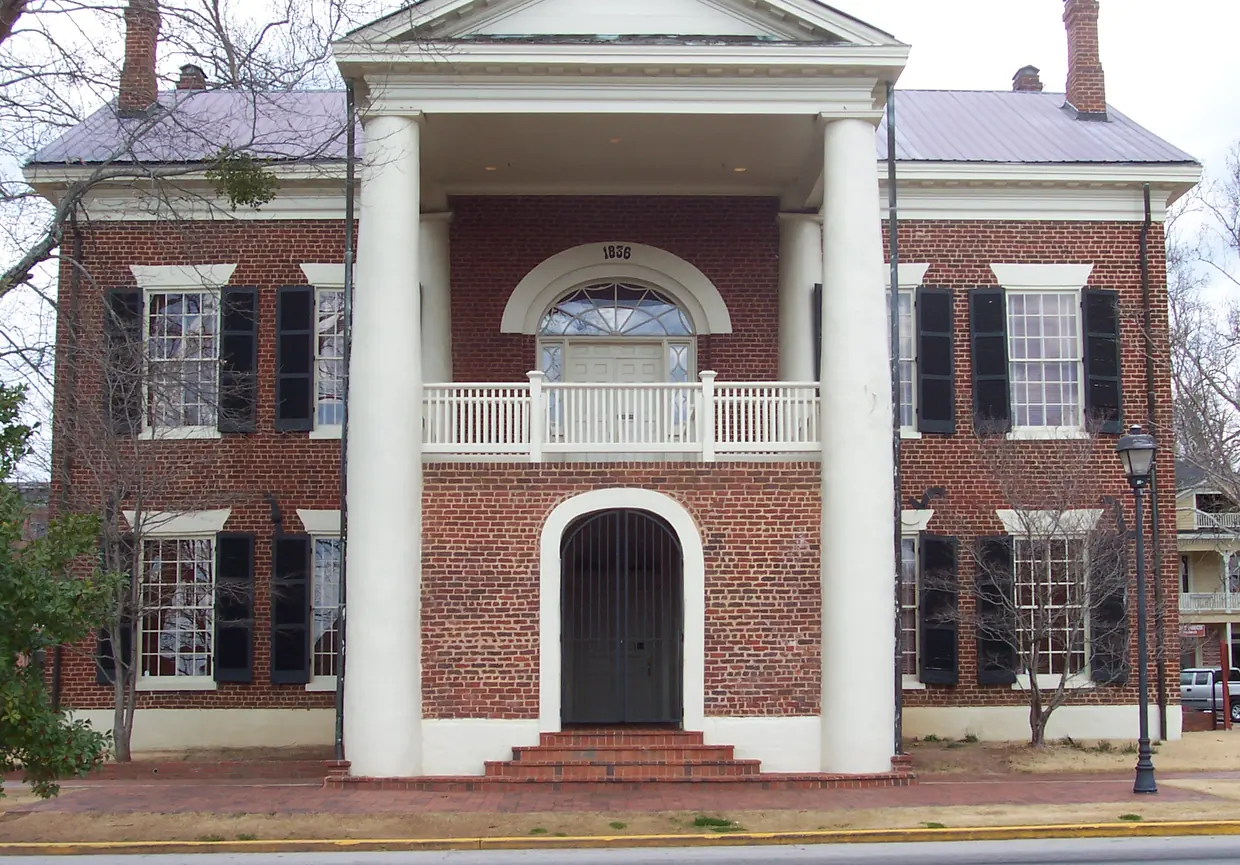
Most buyers and sellers in Dahlonega meet their closing attorney for the first time at the signing. By then the attorney’s office has been working on the file for weeks. This page explains where the rule comes from, what the attorney is responsible for, and the questions worth asking before closing day.
Why a Georgia closing needs a licensed attorney
The rule comes from the Supreme Court of Georgia, which regulates the practice of law. It is not a custom of local real estate offices. The Court approved an advisory opinion holding that closing a sale, and preparing or overseeing the signing of a deed for someone else, is work only a licensed Georgia attorney may do.
What the Supreme Court of Georgia held
- Under Supreme Court of Georgia rulings, it is the unauthorized practice of law for anyone other than a licensed Georgia attorney to close a real estate transaction for a seller, borrower or lender. Supreme Court of Georgia, In re UPL Advisory Opinion 2003-2, 277 Ga. 472 (2003), opinion text (PDF) hosted by the State Bar of Georgia, checked 2026-10-19
- The Supreme Court of Georgia has held that only a licensed Georgia attorney may prepare a deed of conveyance or oversee its signing for someone else. Supreme Court of Georgia, In re UPL Advisory Opinion 2003-2, 277 Ga. 472 (2003), opinion text (PDF) hosted by the State Bar of Georgia, checked 2026-10-19
- The case is In re UPL Advisory Opinion 2003-2, 277 Ga. 472, decided by the Supreme Court of Georgia on November 10, 2003. Supreme Court of Georgia, In re UPL Advisory Opinion 2003-2, 277 Ga. 472 (2003), opinion text (PDF) hosted by the State Bar of Georgia, checked 2026-10-19
- The Court said that since at least 1932 Georgia's statutory policy has been that only properly licensed Georgia attorneys may close real estate transactions, citing O.C.G.A. 15-19-50. Supreme Court of Georgia, In re UPL Advisory Opinion 2003-2, 277 Ga. 472 (2003), opinion text (PDF) hosted by the State Bar of Georgia, checked 2026-10-19
You can read the opinion itself on the State Bar of Georgia’s site: In re UPL Advisory Opinion 2003-2 (PDF).
What the rule covers
The rule is broader than the signing appointment. It covers the deeds that move or pledge the property, and it stops an attorney from putting a non-lawyer in charge.
The scope of the rule
- The Court said its rule covers deeds of conveyance including warranty deeds, limited warranty deeds, quitclaim deeds, security deeds and deeds to secure debt. Supreme Court of Georgia, In re UPL Advisory Opinion 2003-2, 277 Ga. 472 (2003), opinion text (PDF) hosted by the State Bar of Georgia, checked 2026-10-19
- The Court noted earlier opinions confirming that a lawyer cannot hand off responsibility for a real estate closing to a non-lawyer. Supreme Court of Georgia, In re UPL Advisory Opinion 2003-2, 277 Ga. 472 (2003), opinion text (PDF) hosted by the State Bar of Georgia, checked 2026-10-19
- The Court declined to allow 'witness-only' closings, where a notary or signing agent presides over the signing while claiming to act only as a witness. Supreme Court of Georgia, In re UPL Advisory Opinion 2003-2, 277 Ga. 472 (2003), opinion text (PDF) hosted by the State Bar of Georgia, checked 2026-10-19
- State Bar of Georgia guidance requires the lawyer in every real estate transaction to control the closing process from beginning to end, consistent with Formal Advisory Opinion 13-1. State Bar of Georgia, Formal Advisory Opinion No. 23-1 (issued Jan. 23, 2025; Supreme Court Docket No. S25U1154), PDF, checked 2026-10-19
That is why a notary or signing agent cannot run a Georgia closing alone, even one who says they are only witnessing signatures. Staff can help, but the attorney stays responsible for the closing from start to finish.
What the closing attorney’s office handles
Every office runs its files a little differently, so ask yours for its checklist. These are the parts of the job the law speaks to directly:
- The deed. Preparing the deed for the seller and overseeing its signing. What each closing document does.
- The money. Georgia’s good-funds law names the lender or an active member of the State Bar as the settlement agent who pays out the proceeds, and limits what kinds of funds can be paid out.
- The taxes. The state transfer tax has to be paid before the deed can be recorded.
- The recording. The deed goes on record with the Clerk of Superior Court in the county where the land is.
The rules behind those steps
- Georgia's good-funds law defines the 'settlement agent' as the lender or an active member of the State Bar of Georgia responsible for conducting the settlement and paying out the proceeds. O.C.G.A. 44-14-13 (2025 Georgia Code), via Justia, checked 2026-10-19
- Under Georgia's good-funds law, a settlement agent generally may not pay out closing proceeds unless the money is 'collected funds' in the agent's escrow account. O.C.G.A. 44-14-13 (2025 Georgia Code), via Justia, checked 2026-10-19
- The transfer tax must be paid before a deed can be recorded with the clerk of superior court, and the clerk attaches a certification that it was paid. Georgia Department of Revenue, Real Estate Transfer Tax page, checked 2026-10-19
- Georgia law says every deed conveying land is to be recorded in the office of the clerk of superior court in the county where the land is located. O.C.G.A. 44-2-1, via FindLaw Codes (marked 'Current as of March 28, 2024'), checked 2026-10-19
Before closing, the office also looks at the county’s land records for the property. Those records show past sales, liens and the deed book and page. Ask the attorney what the search turned up and what has to be cleared before you sign.
GSCCCA's statewide real estate index covers property transactions from all Georgia counties since January 1, 1999, including seller and buyer names, liens and the deed book and page. (GSCCCA, Real Estate Index search page, checked 2026-10-19)
Whom the closing attorney represents
In a typical financed purchase, the closing attorney is often engaged on the lender’s behalf. Ask the attorney at the start whom they represent. If you want your own lawyer, you can hire one.
No Court, State Bar or Georgia Real Estate Commission source we read says whom the closing attorney represents in every deal, so treat the following as one firm’s description, not a rule:
One Northeast Georgia law firm’s view
- A Northeast Georgia law firm describes the closing attorney's primary function as representing the lender and overseeing the transaction. Stewart, Melvin & Frost (Gainesville, Ga. law firm), 'Real Estate – What is the role of a closing attorney' (page modified 2022-11-03), checked 2026-10-19
- The same firm says buyers are not required to have their own attorney, and that a buyer who wants personal representation will likely pay separately for it. Stewart, Melvin & Frost (Gainesville, Ga. law firm), 'Real Estate – What is the role of a closing attorney' (page modified 2022-11-03), checked 2026-10-19
If the answer matters to you, and it often does for sellers and for buyers with unusual property, ask in writing. Questions to ask before you choose an attorney.
Can you close without an attorney?
Only for yourself. The rule is about acting for other people.
Georgia's attorney-closing rule does not stop people from handling, on their own behalf, transactions to which they are a party. (Supreme Court of Georgia, In re UPL Advisory Opinion 2003-2, 277 Ga. 472 (2003), opinion text (PDF) hosted by the State Bar of Georgia, checked 2026-10-19)
If a lender is involved, it will have its own requirements for who closes the loan. Ask the lender before you plan anything else.
Does the attorney have to be in the room?
Not under the State Bar’s most recent opinion, as long as the attorney stays in control of the closing.
A 2025 State Bar of Georgia formal advisory opinion says a lawyer can conduct a real estate closing by video conference, as long as the lawyer controls the closing process from beginning to end. (State Bar of Georgia, Formal Advisory Opinion No. 23-1 (issued Jan. 23, 2025; Supreme Court Docket No. S25U1154), PDF, checked 2026-10-19)
Whether your closing can be done that way is up to your attorney and lender. Remote and power-of-attorney closings covers what the opinion does and does not settle.
What a closing attorney will not answer for you here
Divorce, estate disputes, a specific title defect and tax questions are outside this guide. Talk to a Georgia attorney, or a tax professional for tax questions. For everything else, find out who answers which closing question.
Questions buyers ask
Is Georgia a closing attorney state?
Yes. The Supreme Court of Georgia treats closing a real estate transaction for a seller, borrower or lender as the practice of law, which only a licensed Georgia attorney may do.
What do lawyers do at real estate closings in Georgia?
State Bar of Georgia guidance requires the lawyer in every real estate transaction to control the closing process from beginning to end. That includes overseeing the signing of the deed, which only a licensed Georgia attorney may do for someone else.
Can a notary or signing agent run my closing?
Not on their own. The Supreme Court of Georgia declined to allow witness-only closings, where a notary or signing agent presides over the signing while claiming to act only as a witness.
Do I need my own attorney as a buyer?
You are not required to have one. A Northeast Georgia law firm says a buyer who wants personal representation will likely pay separately for it. Ask the closing attorney whom they represent before you decide.
Education, not legal advice. Statutes, fees and forms change; every rule on this page links to the law or office that sets it. Your closing attorney and your contract decide what applies to your closing.